
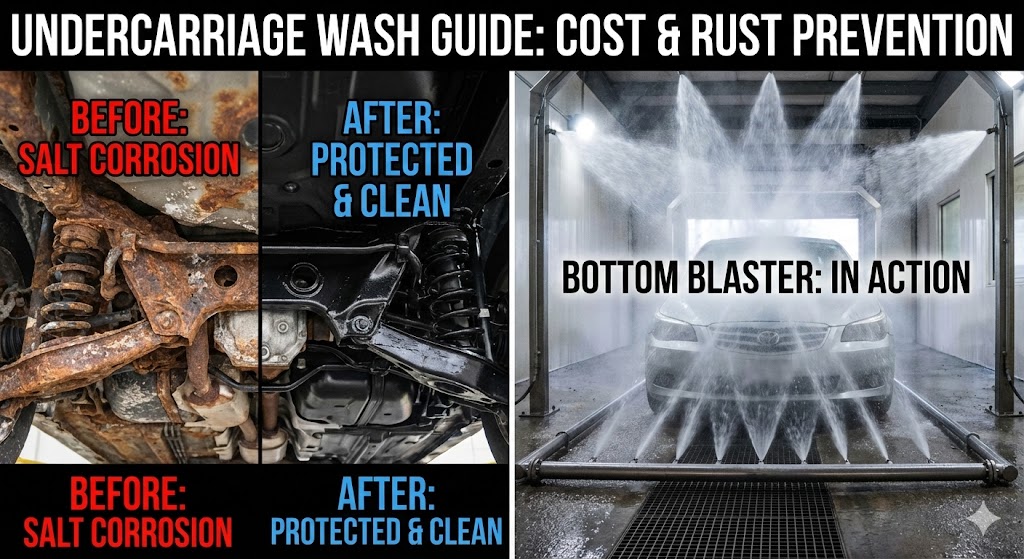
“Out of sight, out of mind.” This old adage is the primary reason why thousands of vehicles in the Rust Belt fail safety inspections every year.
While we obsess over the shine of our hood and the cleanliness of our rims, the most expensive components of our vehicles—the frame, brake lines, and suspension—are often left caked in a corrosive mixture of mud and road salt.
In 2026, with municipal road crews using stickier, liquid magnesium chloride brines to melt ice, the risk of rapid corrosion is higher than ever. But how much does it actually cost to clean the underside of your car? Is the $3 “Bottom Blaster” at the drive-thru car wash enough?
This guide breaks down the undercarriage wash costs, compares DIY methods vs. professional services, and explains the science of saving your car from rust.
1. Undercarriage Wash Cost Breakdown (2026 National Averages)
The price of cleaning your chassis depends entirely on the method. Here is what you can expect to pay across the US:
The “Tunnel Wash” Reality
Most automatic car washes, like Mister Car Wash or Zips, include an “Undercarriage Spray” in their mid-tier and top-tier packages.
Basic Wash ($10): Usually excludes undercarriage.
Gold/Platinum Wash ($20+): Includes the spray.
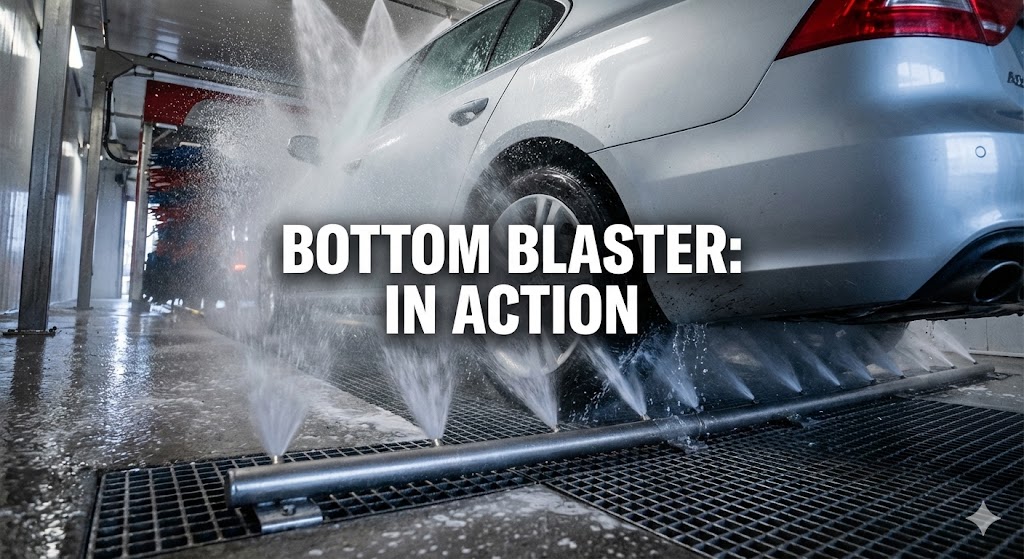
The Flaw: These systems typically rely on a manifold of upward-facing nozzles that spray for 5-10 seconds as you enter the tunnel. While better than nothing, they often miss nooks and crannies where salt hides.
2. Why Is Road Salt So Dangerous in 2026?
In the past, cities used rock salt. Today, they use Liquid De-icers (Brine). This mixture often contains magnesium chloride or calcium chloride.
It Sticks: It is designed to stick to the road so it doesn’t blow away. This means it also sticks to your muffler and frame rails like glue.
It Reactivates: Even if dry, when humidity rises, the salt reactivates and continues eating away at your metal.
The Cost of Not Washing:
Brake Line Replacement: $1,000+
Exhaust System Repair: $800+
Frame Welding: $2,000+ (or total loss of vehicle).
Compared to these repair bills, a $20 car wash is cheap insurance.
3. DIY vs. Professional: Which Method Wins?
Option A: The Self-Service Bay (Budget Choice)
If you visit a self-service car wash, you can kneel down and spray the undercarriage yourself.
Technique: Use the high-pressure wand. Do not just spray the center; aim for the wheel wells and suspension arms.
Cost: About $5 in quarters.
Cons: You will get wet, and it is uncomfortable in freezing temperatures.
Option B: The “Water Broom” (Homeowner Choice)
For those with a pressure washer at home, purchasing an “Undercarriage Cleaner Attachment” (a wheeled device with upward nozzles) is a game changer.
Cost: $30 – $60 on Amazon.
Pros: Buy it once, use it forever. Very effective.
Cons: You need to own a pressure washer and have the water turned on in winter (risk of frozen pipes).
4. Special Case: Electric Vehicles and Hybrids
Owners of EVs (Tesla, Rivian, Ford Lightning) often ask: Is it safe to spray the bottom of my car? The answer is Yes. The high-voltage battery pack is sealed and waterproof.
However, the risk for EVs isn’t the battery—it’s the coolant lines. Many EVs run coolant lines under the chassis to regulate battery temperature. If road salt corrodes the clamps or lines, a leak can brick the battery.
Recommendation: Use a Touchless Car Wash with undercarriage spray at least twice a month in winter.
5. Frequency Guide: When Should You Wash?
How often do you really need to spend the extra money?
The “40-Degree Rule”: Try to wash your car when the temperature rises above 40°F (4°C). Salt becomes most active (corrosive) when ice melts into water. A frozen car doesn’t rust as fast as a wet, salty car in a warm garage.
6. Rust Proofing vs. Undercarriage Washing
Don’t confuse cleaning with protection.
Washing: Removes salt (Reactive).
Rust Proofing (Undercoating): Applying an oil or rubberized coating to prevent salt from touching metal (Proactive).
Cost of Rust Proofing:
Fluid Film / Krown: $150 – $200 per year.
Rubberized Spray: $500+ (One time, but can trap moisture if done poorly).
We recommend an annual oil-based undercoating plus regular winter washing for maximum longevity.
7. Frequently Asked Questions (FAQ)
Q: Does rain clean the undercarriage? A: No. Driving in the rain creates a mist, but it lacks the pressure to blast away sticky brine or caked-on mud. In fact, “acid rain” in industrial areas can be slightly corrosive itself.
**Q: Is the “Undercarriage Wash” at gas stations worth the extra $3?** A: Yes. Considering the cost of welding a rusted frame, $3 is negligible. Even if it only removes 70% of the salt, that is a significant reduction in corrosion risk.
Q: Can I use a lawn sprinkler to wash under my car? A: This is an old-school trick! Yes, sliding an oscillating lawn sprinkler under your parked car for 20 minutes is a cheap, effective way to rinse off salt in the spring.
Q: Will an undercarriage wash damage my car? A: Generally, no. However, if you have a very old car with loose heat shields or hanging wires, high-pressure jets could potentially dislodge them. For modern cars, it is perfectly safe.
Conclusion: Don’t Skip the Bottom
The most vital part of your car is the part you never see. In 2026, with vehicle prices averaging nearly $50,000, preserving your chassis is essential for resale value.
Our Advice: During winter months, upgrade your wash package to include the undercarriage spray every other visit. Once spring arrives, perform a deep clean to remove every trace of winter salt.
Find the best wash with undercarriage services near you using our Express Car Wash Finder.

