
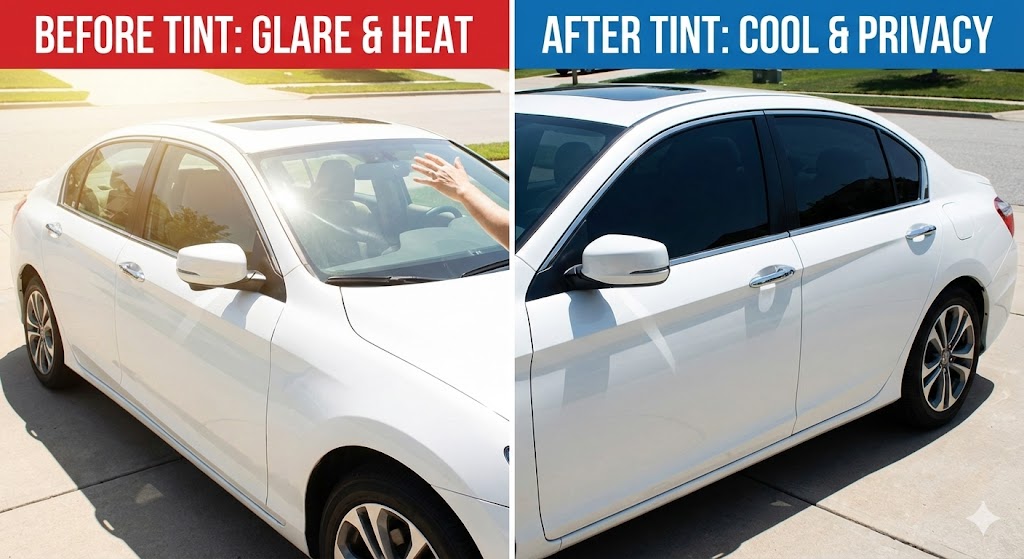
You just bought a new car. It looks great, but after parking it in the sun for 30 minutes, the interior feels like an oven.
In 2026, Window Tinting isn’t just about looking cool or hiding from the paparazzi. It is a functional necessity for heat rejection and UV protection.
But when you call a shop, you get a confusing menu: “Do you want Dyed? Carbon? Nano-Ceramic?” And the prices range from $200 to $1,000+.
Is the expensive “Ceramic Tint” actually worth it? Or is it just marketing hype?
This guide breaks down Window Tinting prices for 2026, explains the real difference between the film types, and helps you decide which percentage (VLT) is right for your ride.
1. Window Tinting Prices 2026 (By Film Type)
The price of tinting depends heavily on the material technology. Labor is roughly the same, but the film cost varies wildly.
Here are the average prices for a standard 4-door sedan in 2026:
Note: “Full Car” typically includes all side windows and the rear windshield. It usually does NOT include the front windshield or sunroof, which are add-ons.
2. The 3 Main Types of Tint: Which Should You Buy?
1. Dyed Film (The “Budget” Choice)
This is essentially a sticker. It makes the glass darker, providing privacy and reducing glare.
Pros: Cheapest option.
Cons: Turns purple over time. Does not block heat.
Verdict: Good for aesthetics on a beater car, but not recommended for new vehicles.
2. Carbon Film (The “Matte” Choice)
Infused with carbon particles. It won’t fade or turn purple.
Pros: Nice matte black finish. Blocks about 40% of infrared heat.
Cons: Can create a slight “haze” at certain angles.
Verdict: A solid middle-ground choice.
3. Ceramic Tint (The “Heat Shield”)
This is the gold standard in 2026. It uses non-conductive ceramic particles to block Infrared Light (IR).
Pros: Blocks up to 90%+ of heat. You can literally feel the difference on your skin. Crystal clear visibility.
Cons: Expensive.
Verdict: If you live in a hot climate (TX, FL, AZ) or drive a glass-roof car like a Tesla, this is mandatory.
3. Understanding Percentages (VLT)
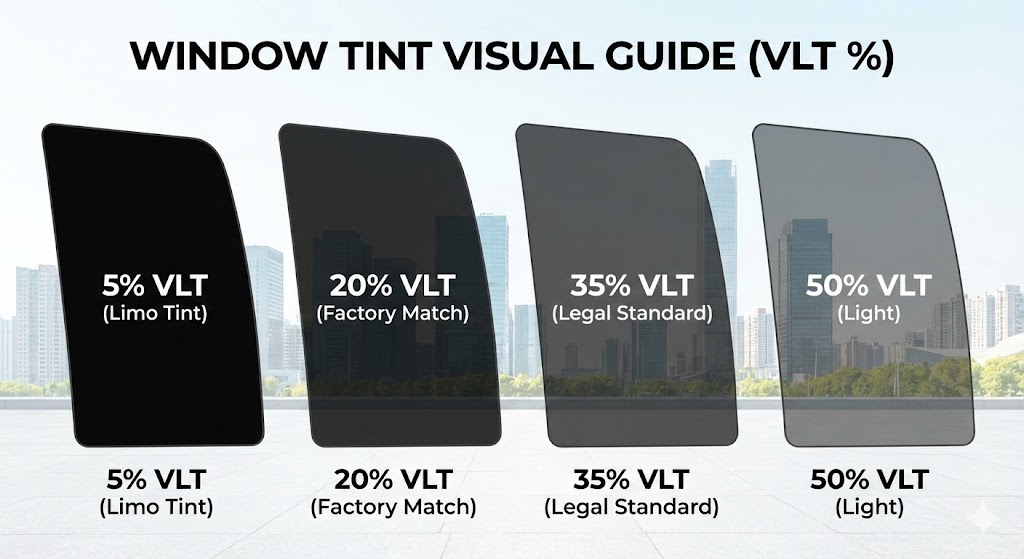
When you choose tint, you choose the “Darkness.” This is measured in VLT (Visible Light Transmission).
5% (Limo Tint): Extremely dark. You cannot see in. Hard to see out at night. Illegal on front windows in most states.
20% (Factory Match): Matches the privacy glass found on the rear of most SUVs. Good balance of privacy.
35% (Legal Standard): The legal limit for front windows in many states. Subtle, classy look.
50% – 70% (Windshield): Very light. Used mainly for heat rejection (Ceramic) without darkening the view.
4. Why Is Ceramic Tint So Expensive?
You might wonder: “Why pay $800 for Ceramic when Dyed is $200?”
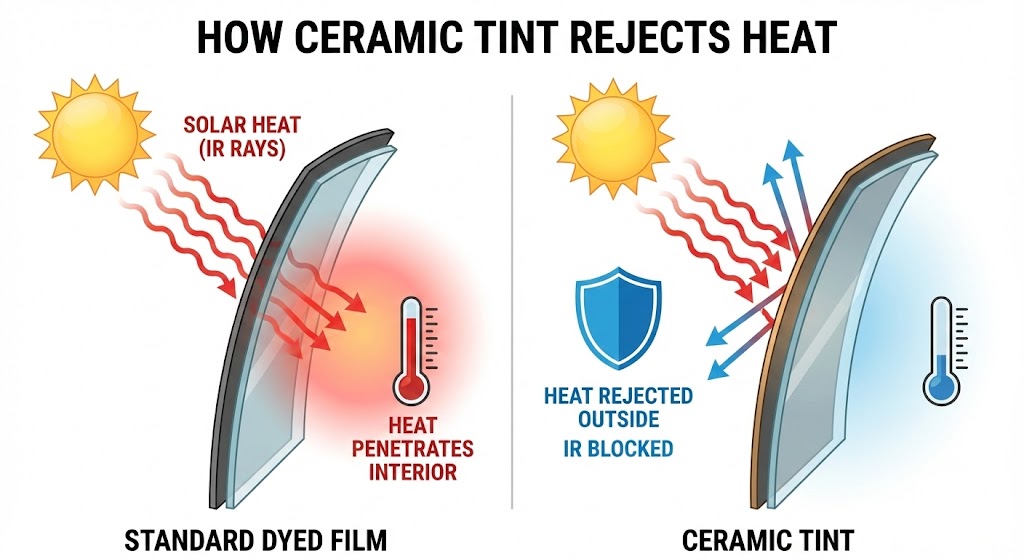
The answer is IR Rejection. Standard tint blocks visible light (the sun’s glare). Ceramic tint blocks Infrared light (the sun’s heat).
Imagine driving in July. With Dyed tint, your arm still burns. With Ceramic tint, your arm feels cool, and your AC doesn’t have to work as hard. This protects your dashboard and leather car seats from cracking and fading.
5. Cleaning & Maintenance
Once you spend $500+ on tint, you need to protect it.
The “Cure Time”: Do not roll down your windows for 3-5 days after installation. The film needs to dry.
No Ammonia: Never use cheap blue glass cleaner (like Windex) on tint. Ammonia eats the adhesive and causes bubbling.
Safe Cleaning: Use a dedicated ammonia-free cleaner or a simple vinegar solution. Check out our guide on How to Clean Car Windows for safe methods.
6. Frequently Asked Questions (FAQ)
Q: Does window tint go on the inside or outside? A: Inside. The installer shrinks the film on the outside to shape it, but the actual installation happens on the interior surface of the glass.
Q: Is it illegal to tint my windshield? A: In most states, you cannot tint the entire windshield below the AS-1 line (the top 5 inches). However, many people install a clear (70% or 80%) Ceramic Air film on the full windshield just for heat reduction, which is practically invisible to police.
Q: Can I go through a car wash immediately? A: Since the tint is on the inside, the exterior wash brushes won’t hurt it. However, we recommend waiting a few days just to ensure the film doesn’t shift from vibrations. See our Car Wash Prices Guide for safe wash options.
Conclusion
Window Tinting is one of the best investments you can make for your comfort.
If you are on a tight budget, Carbon film ($400) is the smart play. But if you plan to keep the car for years and hate the summer heat, upgrading to Nano-Ceramic ($700) is worth every penny. It protects your skin, your interior, and your sanity.

